Spectacular Saltmarshes!
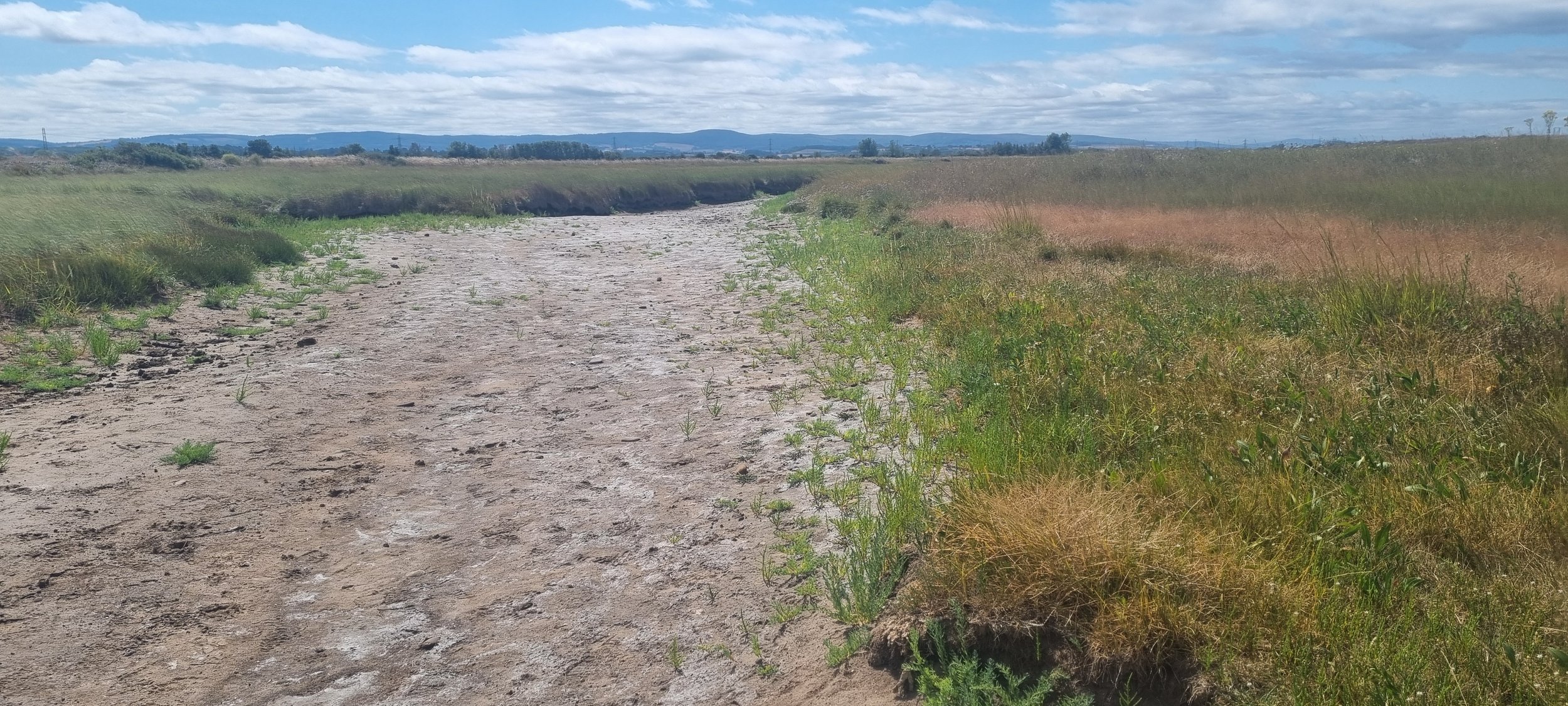
Saltmarshes are found on the coast, and so not something that occurs very near to me in Oxfordshire, and although I grew up on the island of Jersey, there happens to no real Saltmarsh there either. They are a fascinating and beautiful habitat that has seen huge declines, which I wanted to explore and learn more about, so I went to Steart Marshes on the Somerset Coast this summer.
What is a Saltmarsh?
Saltmarsh is a coastal tidal wetland, located in the upper intertidal zone between land and sea. They contain a series of different, somewhat transient, plant communities occurring along environmental gradients, the most prominent of which is the degree of tidal flooding. Others include elevation relative to mean sea level, drainage and soil waterlogging, freshwater influence and grazing and other management.
Mudflats – Soft, muddy areas exposed at low tide and covered at high tide. They are largely unvegetated, although seagrasses such as eelgrass (Zostera spp.) can grow in more stable, shallow areas. Algae and microscopic organisms are also important here.
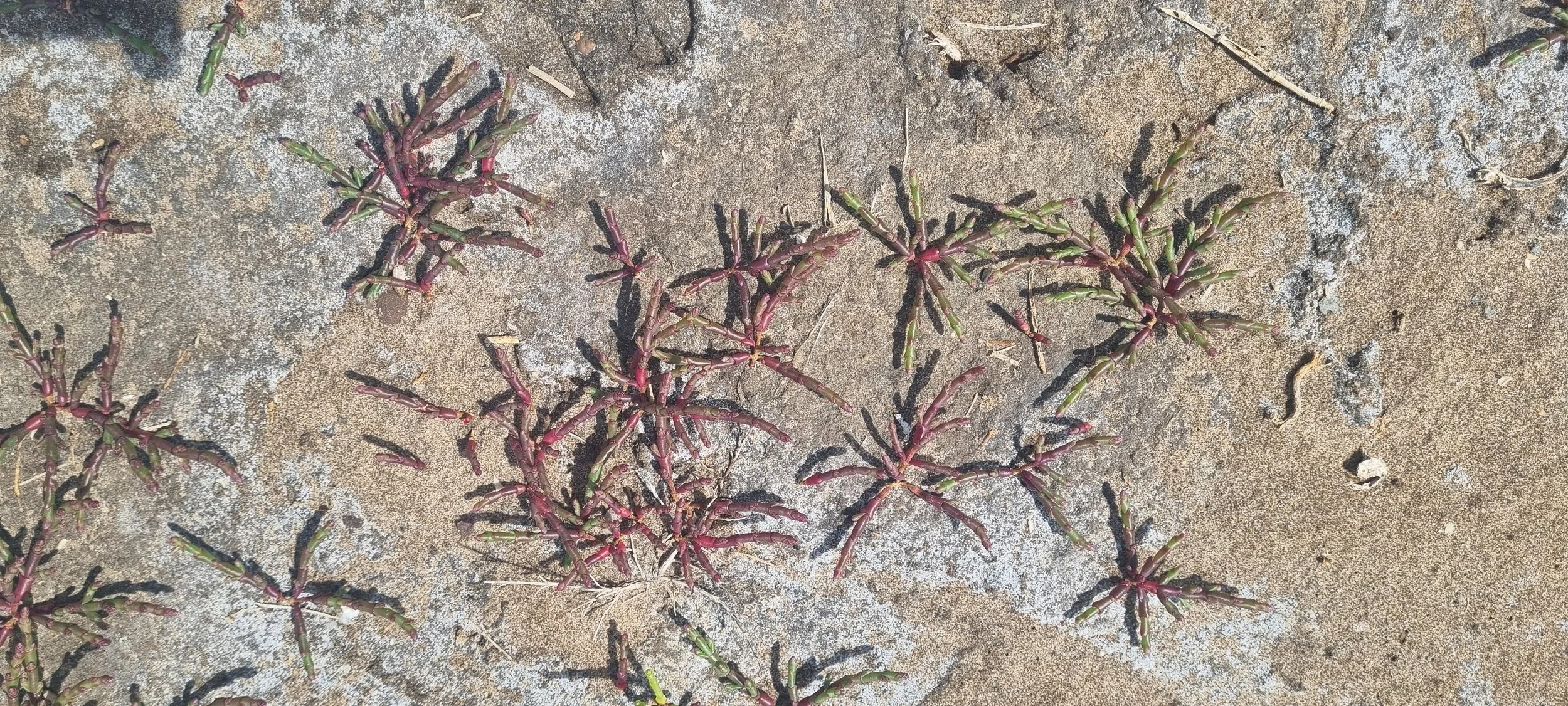
Pioneer Zone – The first vegetated part of the saltmarsh, where highly salt-tolerant plants begin to colonise the mud. Typical pioneer plants include Glasswort (Salicornia spp.), Sea-blite (Suaeda maritima) and cordgrasses (Spartina spp.). These plants help trap sediment and stabilise the developing marsh.
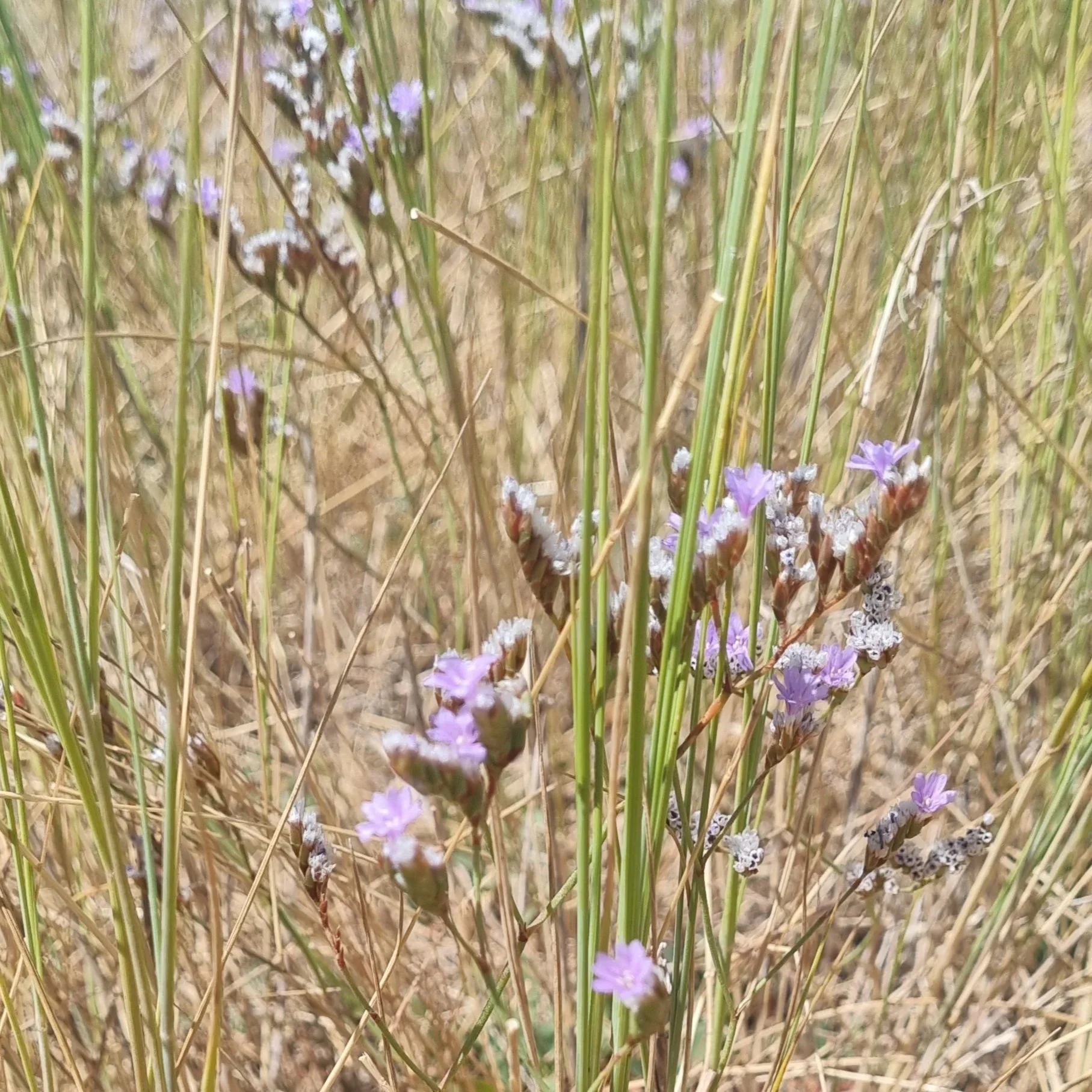
Lower Saltmarsh – The lowest part of the saltmarsh may be inundated by the high tide twice a day, but there will likely be days where it is not covered by the sea (i.e. during the lowest neap tides). Plants here need to tolerate frequent saltwater flooding, including Common Saltmarsh-grass (Puccinellia maritima), Sea Purslane (Atriplex portulacoides), sea lavenders (Limonium spp.), Sea-blite (Suaeda maritima), scurvygrasses (Cochlearia sp.), Sea Plantain (Plantago maritima), Sea Milkwort (Glaux maritima), Sea Aster (Aster tripolium) and, in some areas, Glasswort.
Tidal Creek – Channels that carry seawater into and out of the saltmarsh as the tide rises and falls. Their muddy, waterlogged edges can support salt-tolerant plants such as Sea Purslane, Glasswort and Cordgrass, while the channels themselves may remain largely unvegetated.
Upper Saltmarsh – The highest part of the saltmarsh, flooded mainly by the highest spring tides, so it experiences less saltwater inundation. Species include Saltmarsh Rush (Juncus gerardii), Sea Rush (Juncus maritima), Sea Thrift (Armeria maritima), Sea Aster, and grasses such as Red Fescue (Festuca rubra), and further inland it can transition into freshwater/brackish vegetation such as Common Reed (Phragmites australis), or grassland habitats.
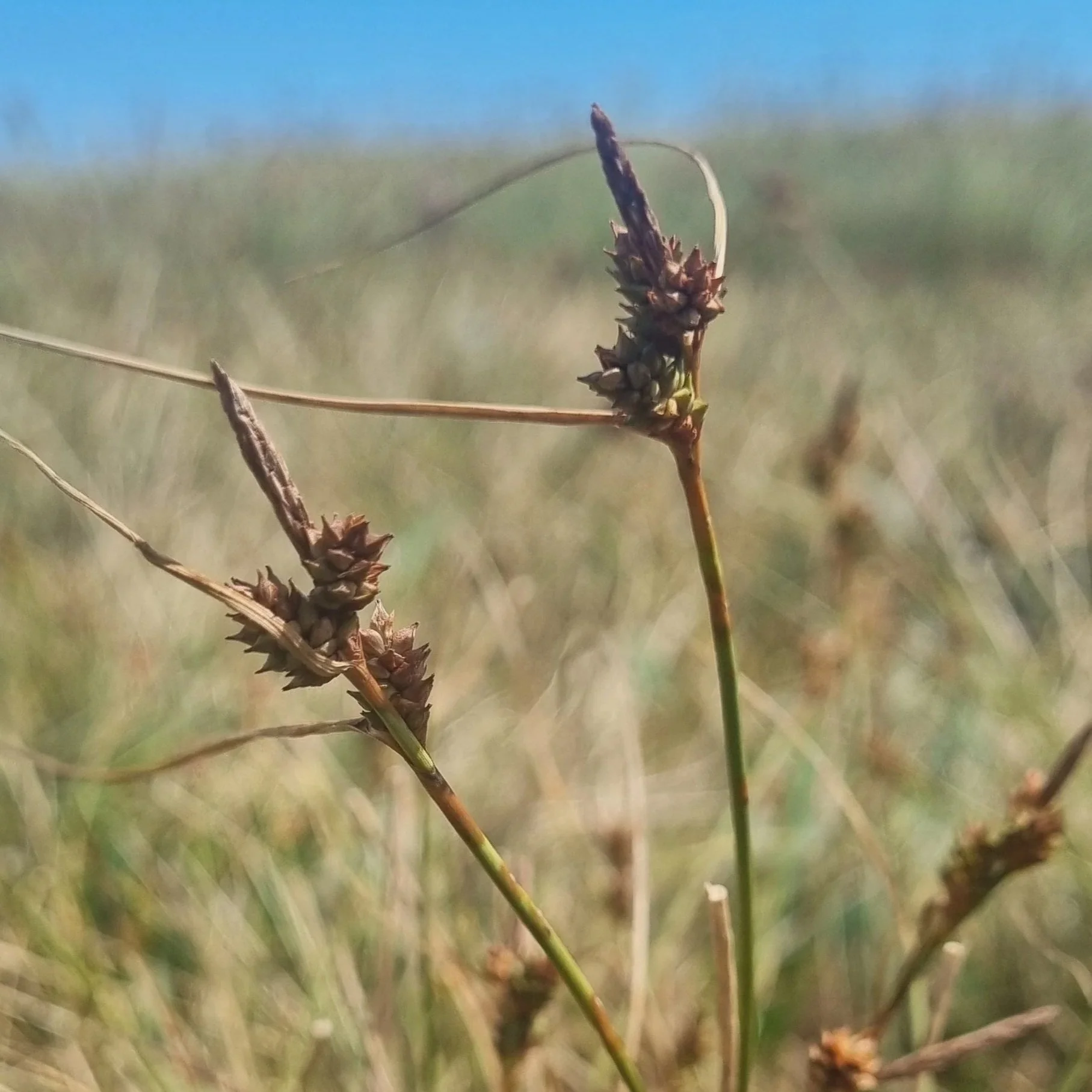
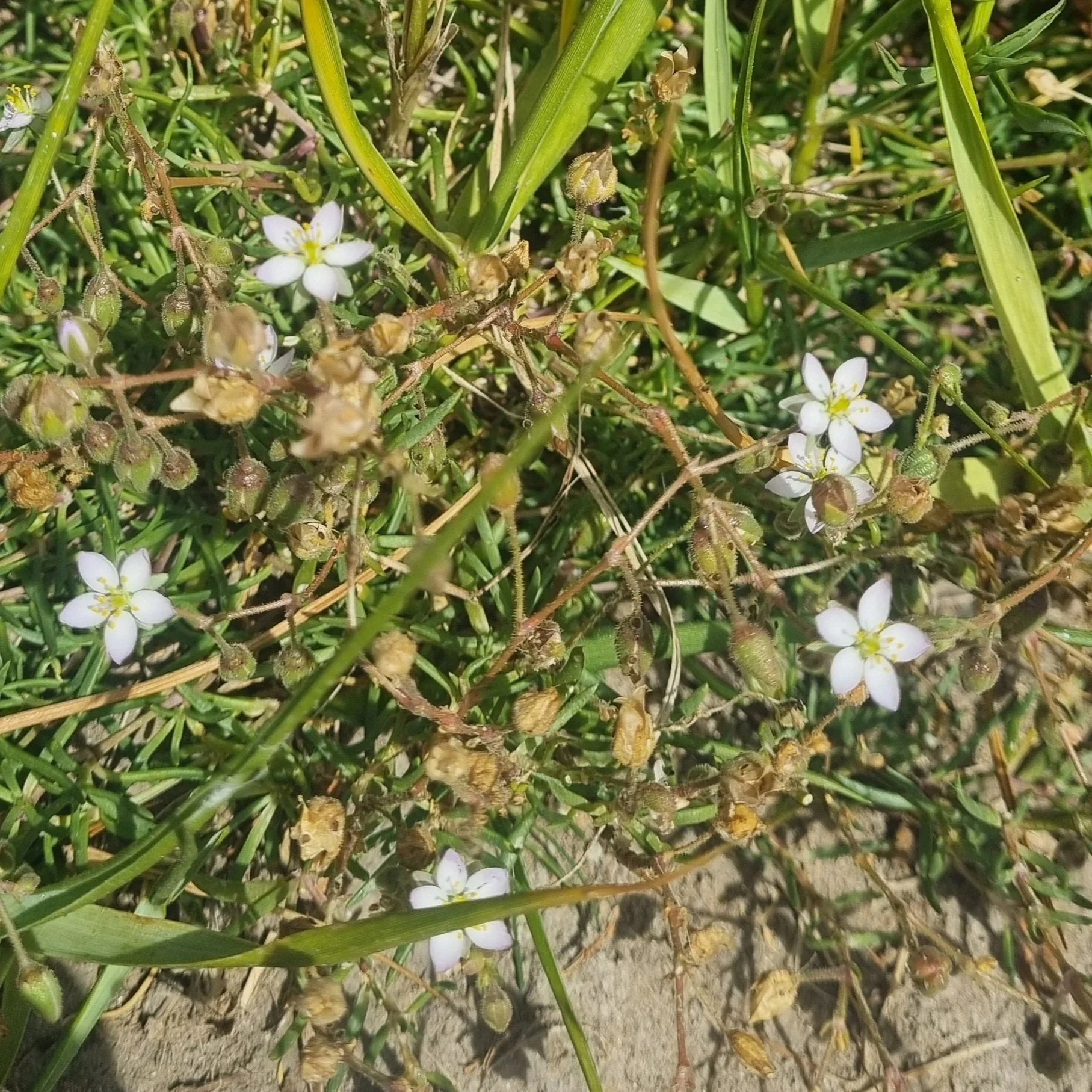
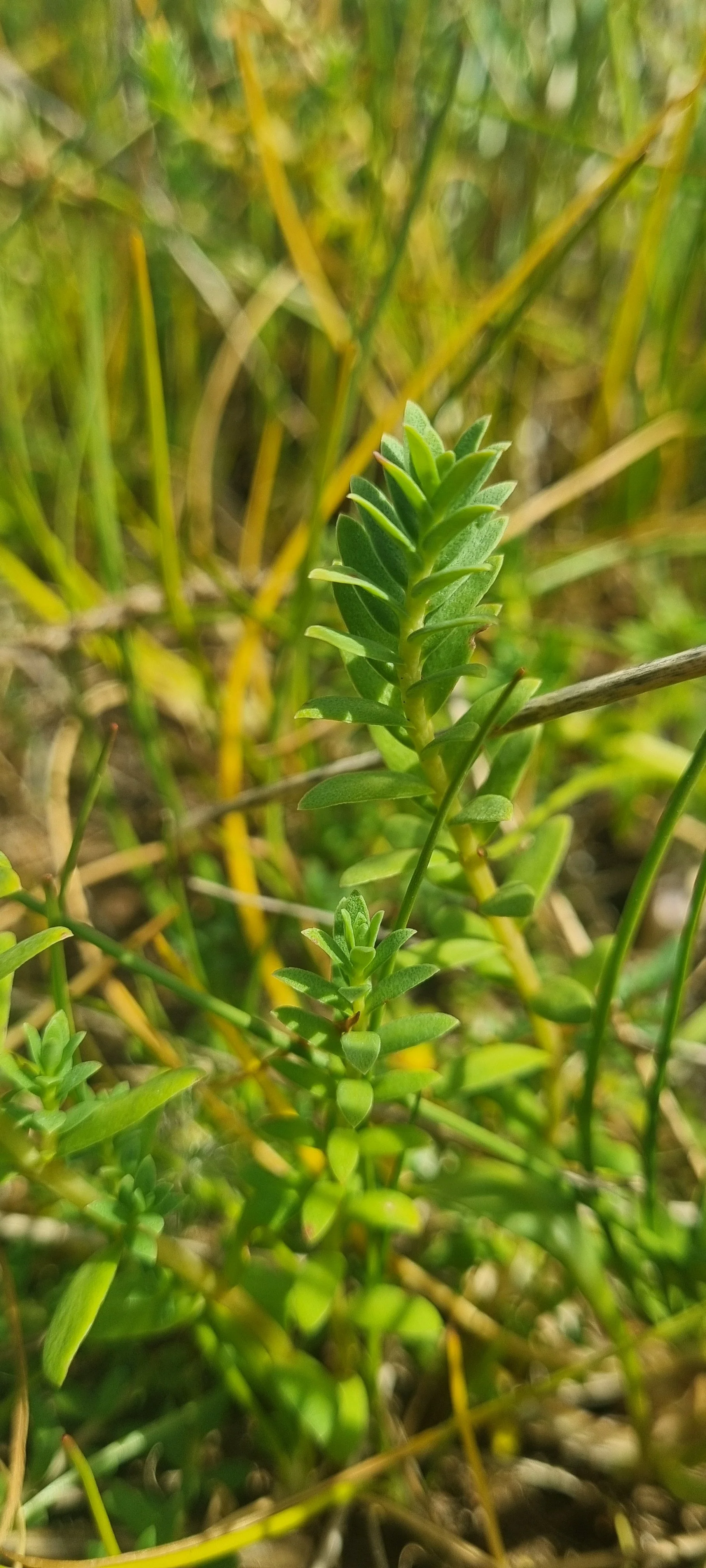
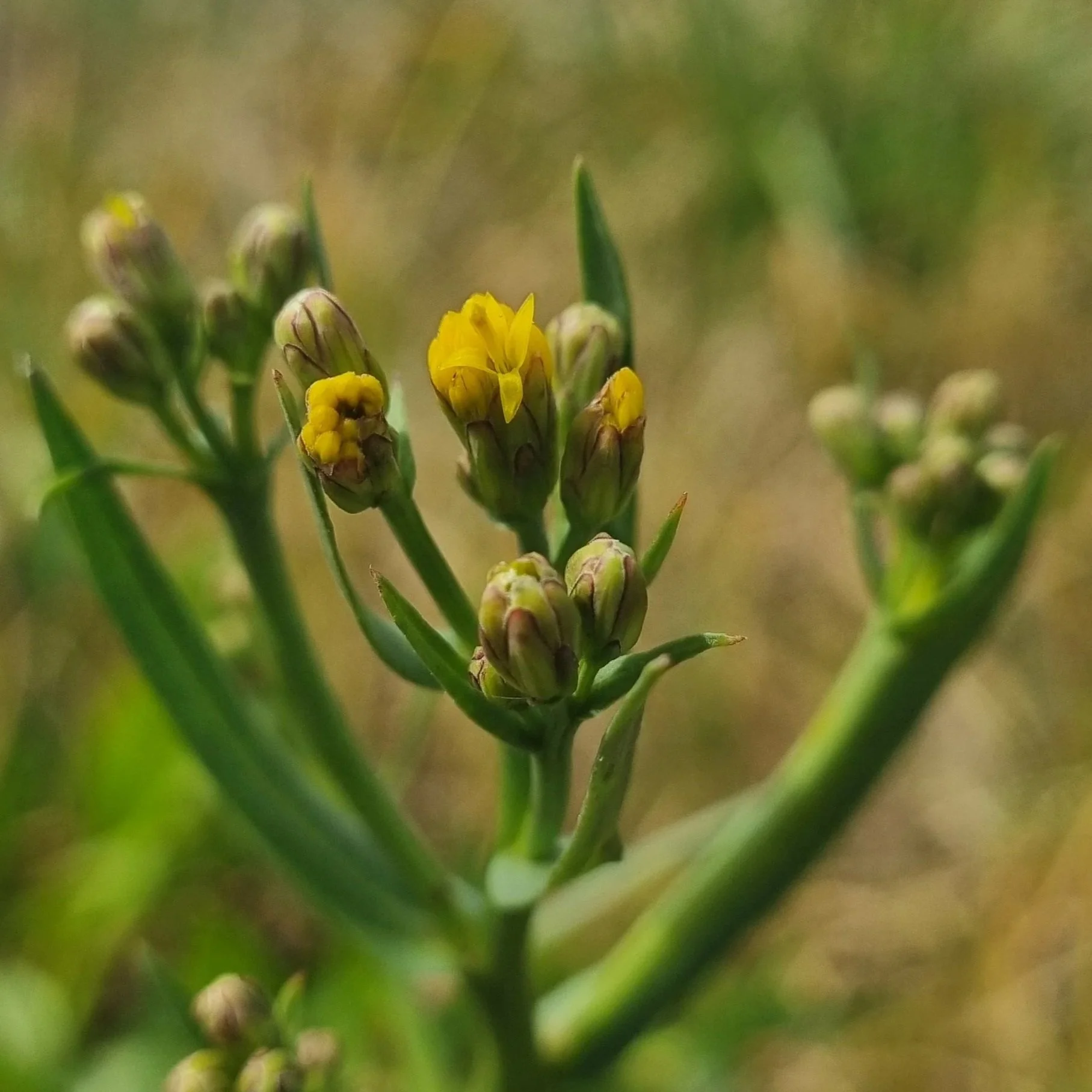
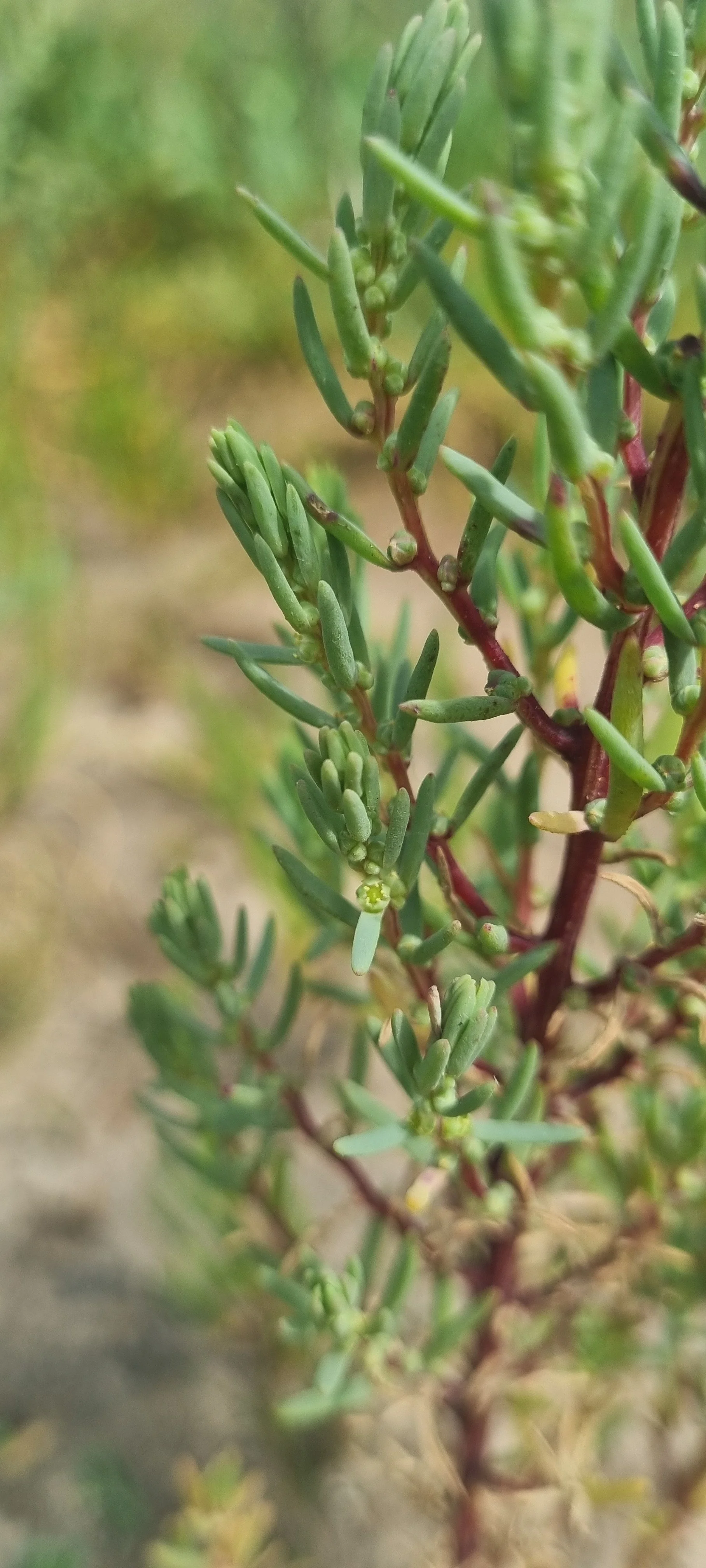
Saltmarsh Plant adaptations
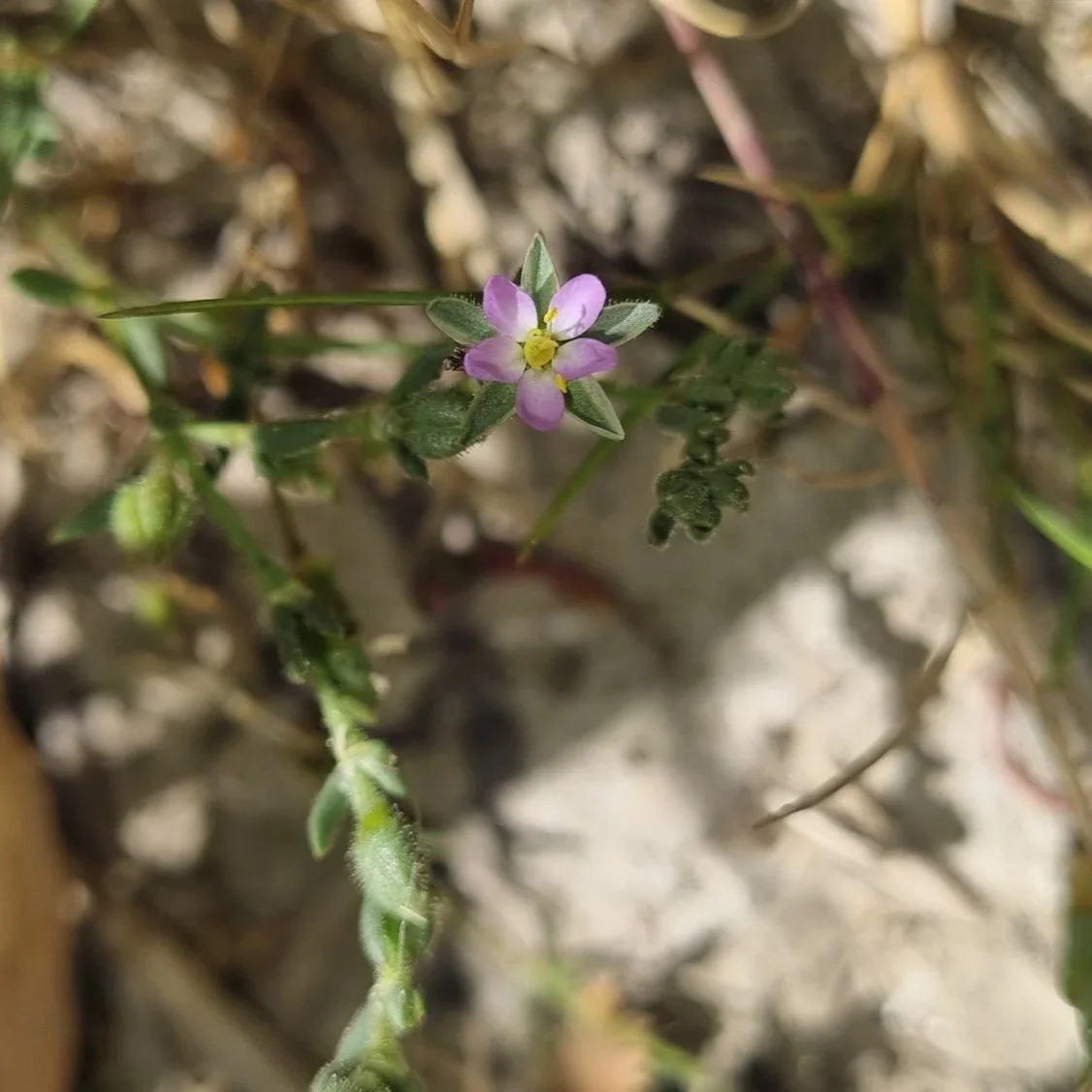
Saltmarsh plants are species adapted to regular tidal flooding, saline soils and waterlogged, oxygen-poor sediments. This creates a distinctive flora dominated by plants which have evolved some clever strategies to deal with this:
Fleshy leaves – store water and dilute the salt concentration within cells.
Thick/increased cuticle – reduces water loss from leaves..
High internal salt concentration – reduces water loss by osmosis.
Aerenchyma – large air spaces transport oxygen down to the roots.
Low-growing habit – reduces exposure to waves and strong winds.
Streamlined/narrow leaves – reduce drag from seawater.
Flexible stems – bend with waves and currents rather than breaking.
Extensive root systems – anchor plants in soft mud and prevent them being washed away.
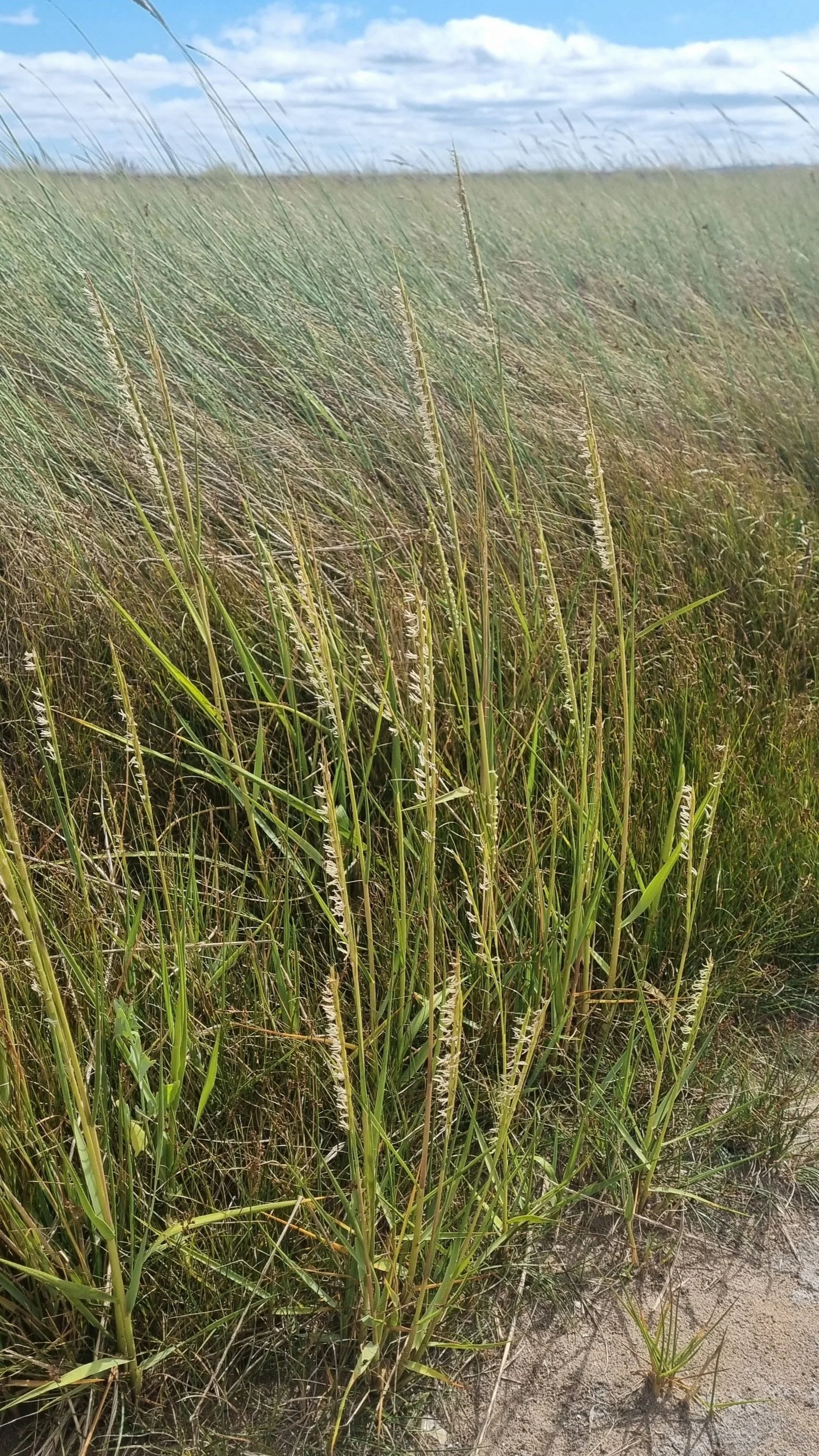
Common Cord-grass
Controversial Cord-grass
Common Cord-grass (Spartina anglica) originated in the UK as a hybrid of the native Small Cord-grass (S. maritima) and the North American Smooth Cord-grass (S. alterniflora) and, also introduced deliberately in the past for the control of coastal erosion and land claim, it has subsequently spread widely.
The species is controversial from a conservation perspective. Its expansion can reduce areas of open mudflat and displace native species such as Seagrasses, Glasswort and native Spartina. This can potentially affect invertebrate-rich inter-tidal mudflat feeding grounds used by wintering and wading birds such as the Dunlin and the Knot. However, S. anglica can also play an important role in stabilising sediments and may contribute to the natural formation of saltmarsh.
Its spread varies considerably between sites, and the report suggests that sediment conditions, tidal processes and hydrodynamics are key factors determining whether populations expand, stabilise or decline.
Various control methods have been attempted, including digging, herbicides, burning and rotoburying (a form of ploughing), but no single method has been shown to be consistently effective.
Steart Marshes
Steart Marshes is a large-scale wetland restoration project on the Somerset coast, created by the Environment Agency and managed by the Wildfowl & Wetlands Trust (WWT). The scheme involved breaching existing sea defences to allow tidal flooding and create a mosaic of saltmarsh, wet grassland, lagoons and freshwater habitats. It now provides important habitat for wetland birds and other wildlife, while also acting as part of the wider flood-risk management strategy for the surrounding area.
Benefits of the Steart Marshes restoration scheme include:
Flood protection: New saltmarsh absorbs wave and tidal energy, reducing flood risk to nearby communities.
Biodiversity: Creates diverse habitats for wading birds, fish, invertebrates and other wildlife.
Carbon storage: Saltmarsh captures and stores carbon within its sediments, helping to reduce greenhouse gas impacts.
Water quality: Wetlands and reedbeds help filter pollutants and excess nutrients from water.
Fish nurseries: Tidal creeks provide sheltered habitat for young fish and support estuarine ecosystems.
Recreation and education: Provides opportunities for walking, birdwatching, cycling and environmental education.
Climate adaptation: Demonstrates how managed realignment and natural coastal processes can provide a sustainable alternative to hard flood defences.
